A Portfolio with Margins: Publishing Less in a Culture of Constant Refresh
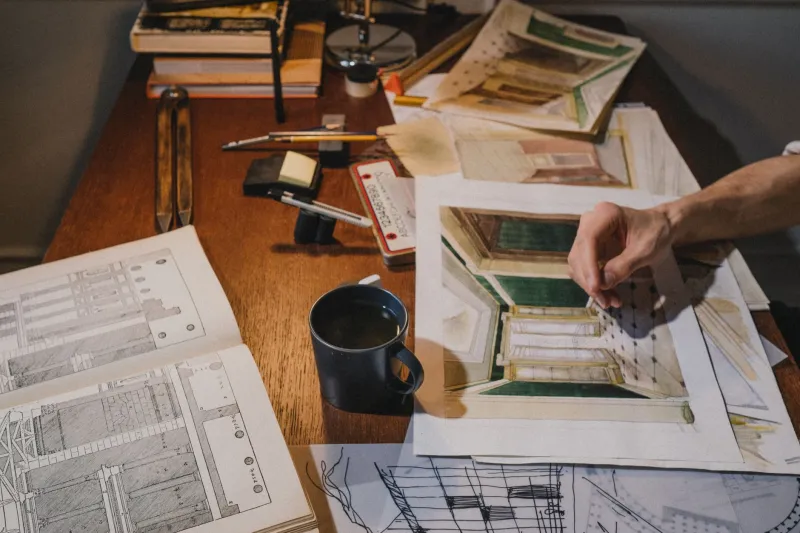
Photo: minimal design portfolio website on laptop with process notes and printed drafts, via i.pinimg.com
The portfolio has become a strange kind of performance. A project ends, a photograph is taken, a caption is written, and the site is updated before the work has had time to settle. In 2026, the tools make this easy enough to feel compulsory. The result is a portfolio that behaves like a feed: recent, restless and strangely weightless.
I want to argue for a slower model. Not a refusal to publish, and not a retreat into obscurity, but a deliberate editorial position: fewer projects, deeper notes, and a more honest account of how ideas actually evolve. For UK freelancers working in a culture of fast turnaround, this may sound like a luxury. I think it is closer to a necessity.
The refresh reflex
The reflex is understandable. Clients are told to look at the website. Competitors seem to announce something new every week. The pressure to appear active is real, particularly in a market where a single commission can lead to the next three. But activity and evidence are not the same thing. A portfolio that changes constantly can begin to look less like a body of work and more like a series of arrivals.
There is also a quieter cost. Every hour spent rebuilding a project page is an hour not spent writing a proper process note. Every new thumbnail added to the top of the grid pushes an older, more considered piece further down. The portfolio becomes a race against its own archive.
What a portfolio is for
A portfolio is not a diary. It is an argument about judgement. It says: this is the kind of problem I understand, this is how I think, this is what it feels like to work with me. That argument is weakened by volume if the volume is undifferentiated. Six projects with clear reasoning can say more than sixteen projects with polished photographs and no explanation.
This is not an argument against showing finished work. Finish matters. But finish is only one part of the evidence. The other part is the shape of the thinking that produced it.
Fewer projects, deeper notes
A slower portfolio might hold five to seven projects at a time. Each one would include a short brief, the constraints that mattered, one or two dead ends, the decision that changed the direction, and a clear outcome. Not a diary of every meeting. Not a confession. A process note.
In the UK, where many commissions pass through committees and approval stages, those constraints are often more revealing than the final artefact. A project that had to satisfy a trustee board, a local authority and a public audience tells you something about design judgement that a beautiful mock-up cannot. The note is where that becomes visible.
The evidence of evolution
Honest evidence of evolution is rare online. Most portfolios show the final version and imply that it arrived fully formed. This is not only misleading; it is boring. The interesting part is usually the wrong turn: the layout that was too clever, the colour that was too safe, the structure that had to be abandoned because the client was right.
A portfolio with margins makes room for that. It does not need to publish every draft. It needs to show that drafts existed and that they changed the work. That is a more credible account of practice than a grid of perfect outcomes.
A slower model in practice
A slower model does not mean neglect. It means scheduling review rather than reacting to anxiety. I would suggest a formal review twice a year, with a simple rule: publish only when a project has settled enough to be described clearly. Keep an internal archive for everything else. Write one process note per project while the decisions are still fresh. Remove work that no longer represents your judgement, even if it was once successful.
There is a useful distinction between being current and being new. A portfolio can be current without being updated weekly. A single well-documented commission from 2026 can say more about a practice than six undated thumbnails. Dates help. Context helps more.
The risk of looking idle
The obvious objection is that clients want recent work. They do. But recent is not the same as new. A client wants to know that you are active, thinking and relevant. A process note can demonstrate all three more convincingly than a constant stream of launches. It shows that you can reflect, not only produce.
There is also a risk in the other direction: a portfolio that looks permanently busy can suggest a practice that never pauses to edit. For a UK freelance market that often rewards speed, the slower portfolio is a quiet form of resistance. It says that judgement takes time, and that the evidence of judgement is worth more than the appearance of momentum.
An editorial position
Publishing less is not a retreat from ambition. It is an editorial position. It treats the portfolio as a considered publication rather than a live feed. It accepts that some projects need to be left out, that some notes need to be longer, and that the archive can be a place of work rather than a display of exhaustion.
In 2026, the most radical thing a freelance designer can do may be to let a project settle before publishing it. Fewer projects, better notes, more margins. The work does not become less visible. It becomes more legible.